


In the entrance of an office building sits a football made of photographic paper. In a building nearby lies a heap that looks like prints that have peeled away. “SOFT COPY”, an exhibition now on view in the streets of Nihonbashi Hamacho, takes the “craft” inherent in photography as its starting point to present forms of photography that go beyond the flat image. We spoke with photographer Taisuke Koyama, director of TOKYO PHOTOGRAPHIC RESEARCH (TPR), which curated the exhibition, about the thinking behind it, where the boundary of photography lies, and what it means to place artworks in the everyday life of the city. The exhibition runs until Sunday, October 25.
Taisuke Koyama
Photographer and director of TOKYO PHOTOGRAPHIC RESEARCH. Born and based in Tokyo, Koyama is self-taught in photography. Drawing on his studies in biology and the natural environment, he creates photographs, videos and installations through experimental approaches. Recent exhibitions include the solo show “UNIVERSAL FLOWING” (THE FLOW, Osaka, 2024) and the group exhibition “NEW ANXIETIES – TPR in Seoul”.
Photographs that don’t look like photographs, found on a walk

The exhibition is spread across the neighbourhood. A special gallery on the ground floor of Tornare Nihonbashi Hamacho serves as its hub, with further venues in the entrances of three office buildings, on the lobby floor of HAMACHO HOTEL and in the Former Danto Building. All of them are within easy reach on foot, as an extension of a stroll.
The special gallery and the Former Danto Building are both properties temporarily stripped back to their bare structure ahead of renovation. For the brief interval before they take on their next form, they have been opened to the neighbourhood as galleries. Giving time in the middle of redevelopment back to the culture of the area is an approach to placemaking characteristic of Yasuda Real Estate.
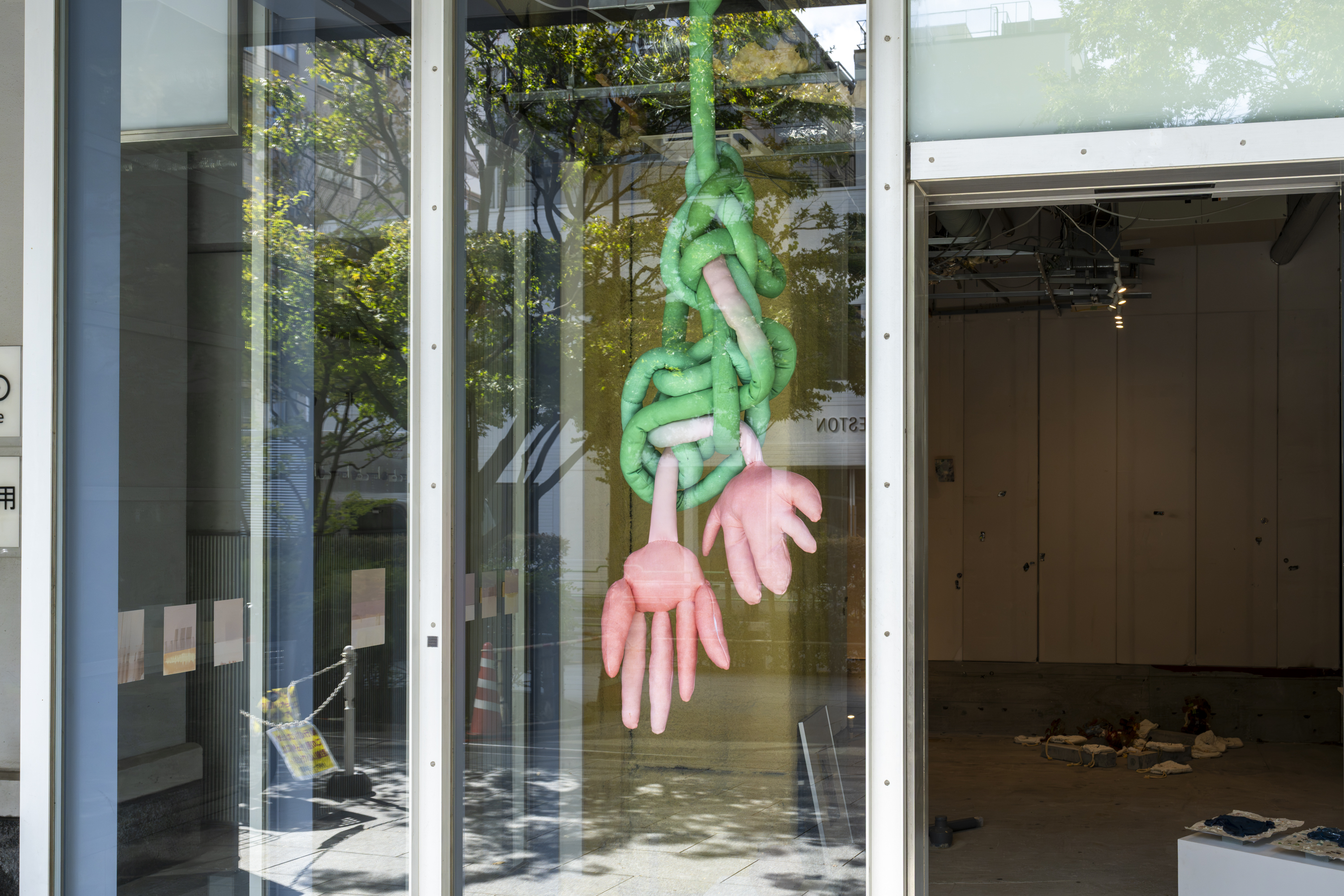
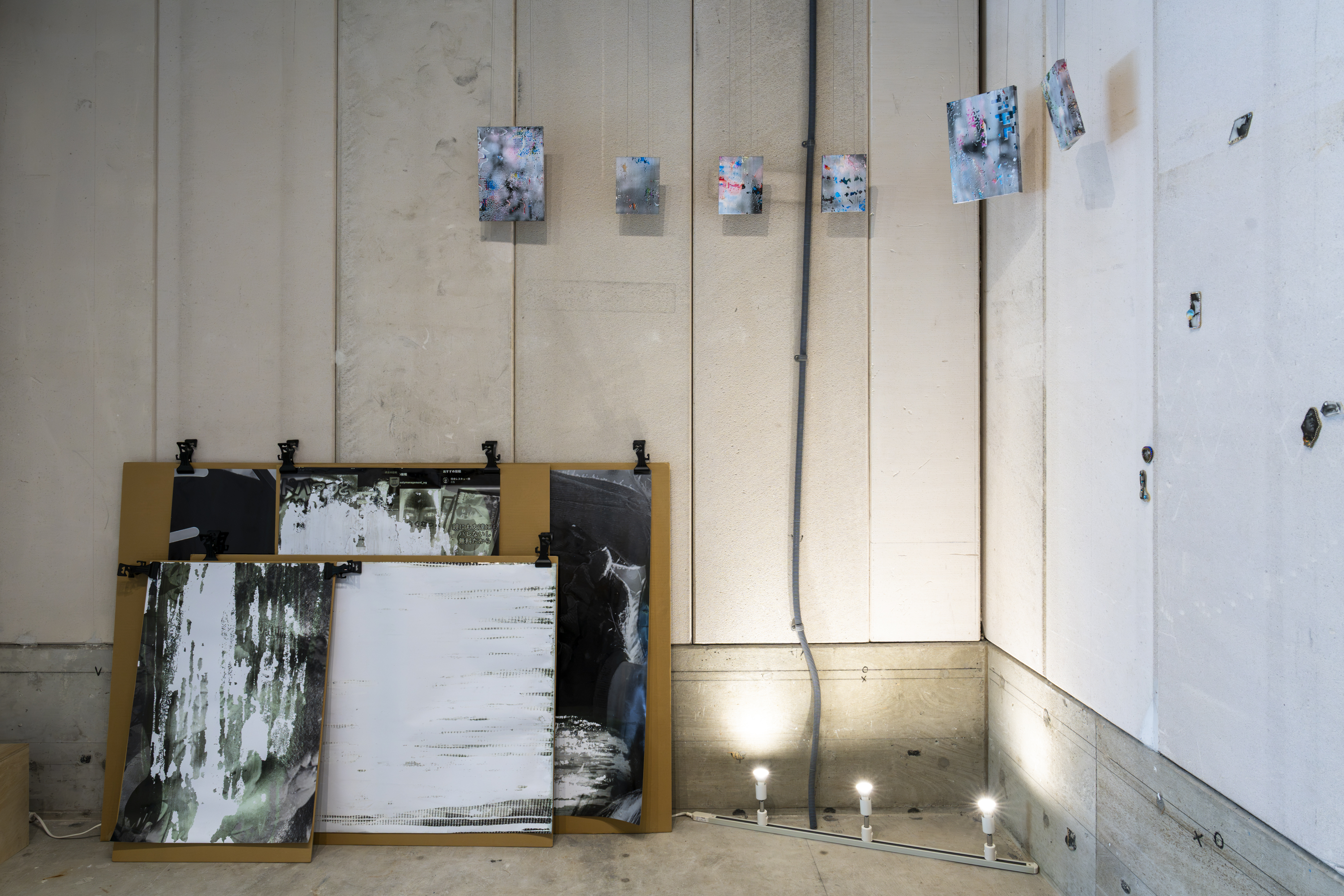
The first thing to catch the eye in the special gallery is Tsubasa Yomiya’s playful sculpture No.2, From the series “Paraiso”, suspended in the entrance window. Yomiya has long moved between the flat image and the object through the handwork of cutting photographs, collaging them and printing them onto fabric. Here, taking “a distance close enough to touch, yet out of reach” as his cue, he explores the distance between image and body, and the presence that arises in a space. Further inside, Koichiro Kojima’s Anesthetic Scape also hangs from the ceiling: inkjet prints transferred onto wooden panels with a clear medium and overlaid with silkscreen. On another pane of glass is Miyo Ogawa’s MY PLANET, photograms made by attaching photographic paper to the windows of a moving car, as if the car itself had become a camera. Mayumi Hosokura’s stickers are dotted across the walls, while Naohiro Utagawa’s embroidered, heat-treated Matamata-hō (Law, Again and Again) spreads across the floor.
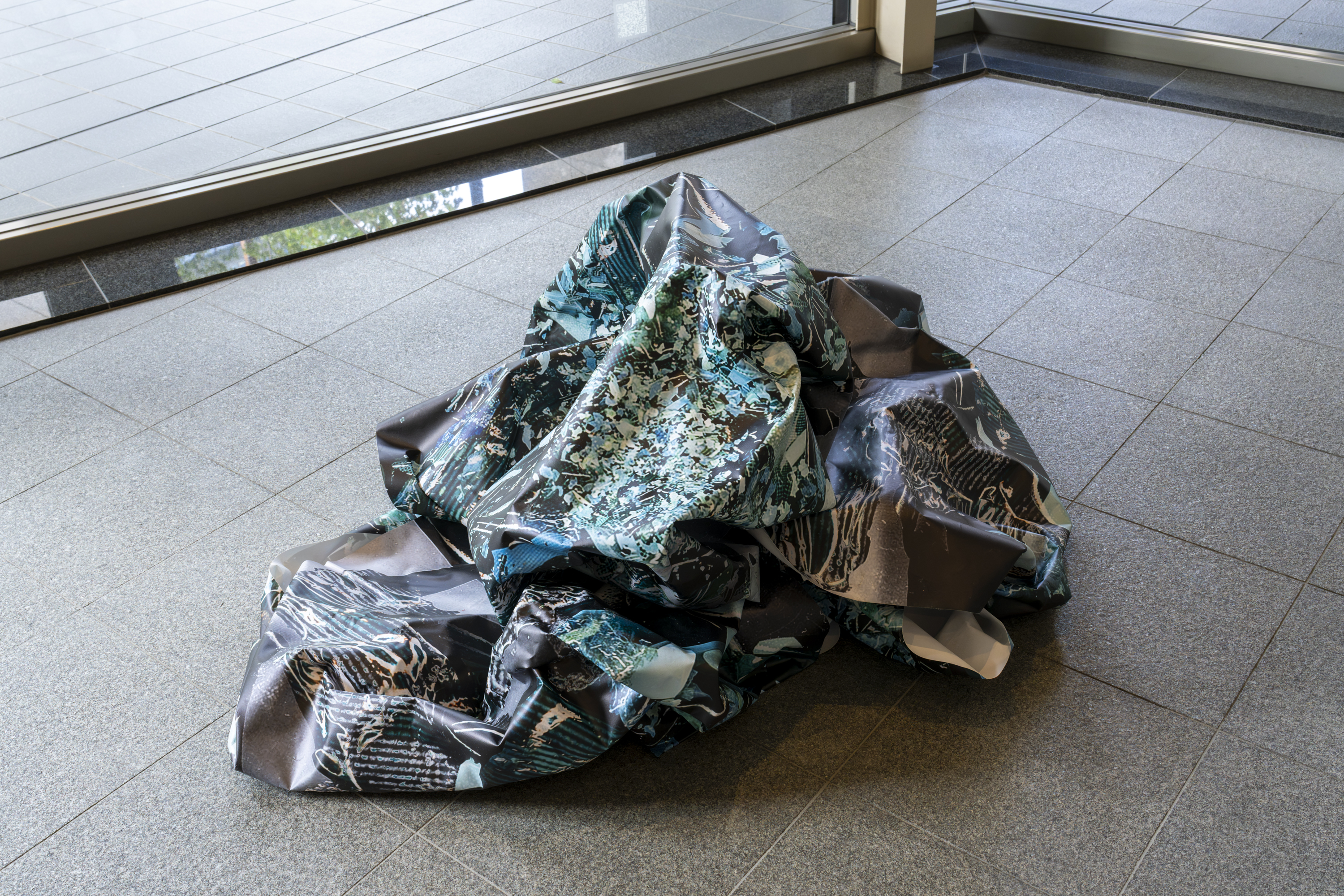
In the office entrances, visitors encounter things even further removed from “photography”: Hideyuki Shimauchi’s mass of tarpaulin, Filtration, and his peeled prints, Skin of the Picture; Shota Tsukiyama’s football made of photographic paper; and Hana Yamamoto’s large-format work, 1.8 metres square, in the office entrance at Tornare. At the Former Danto Building, videos by Hosokura, Ogawa and Heijiro Yagi are projected inside the space.
Almost all the participating artists are photographers, or artists who work with photography. Yet there is not a single “ordinary photograph” in the show. For Koyama, that is exactly what makes “SOFT COPY” interesting.
“They take photographs and think about photography in ways that aren’t among the preset functions of the machine we call a camera. They’re photographers, but they try to think by stepping outside photography. Every artist in this show is doing that.”
TPR: a collective that reads the city through photography
TPR, the collective behind the exhibition, was founded in 2018 with Koyama at its centre. It began by recording, in photographs and video, a Tokyo transformed by redevelopment, and has since carried out more than 75 projects with over 80 artists and groups. In Yurakucho, for example, it has shown works born of research on the hoardings and façades of the same area, treating the city not only as something to photograph but also as a place to show work.
In 2025, TPR published TPR Book #01: Experimental Photography in 200 Years, which rereads the history of photography through the lens of experimentation. The perspective it has turned on the city and its habit of questioning photography as a medium meet in “SOFT COPY”. That skeleton buildings awaiting their next form became venues also feels true to TPR, which has long watched the city change. The participating artists include Shota Tsukiyama and Hana Yamamoto, both assistant directors at TPR.
What “soft” and “copy” mean
The title was chosen after the team put forward several candidates. The starting point was a particular understanding of “craft”: something that carries handwork and human traces, and rises up as a three-dimensional object. The project began by asking what would happen if photography were considered in that light.
“Photographs are basically reproductions. There’s original data or a negative, and you can transfer or reproduce it at all sorts of sizes and on all sorts of materials. The artist’s touch enters that process, and that’s how a work comes into being.”
The “soft” in SOFT COPY refers to flexibility. Not an image fixed at the moment of capture and unchanged ever after, but something that spreads into many forms once it has been recorded: that is photography as Koyama and his colleagues see it.
“It can become sculpture, it can stay flat, it can become video. Maybe photography is something that gets copied flexibly and spreads. Looking at it through the lens of craft this time, I felt it became easier to see than when you think only within photography.”
Is this practice of linking photography and craft a return to photography’s roots? Koyama’s answer was “a spiral”.
“When film turned digital, people asked what photography really was. When AI appeared, they asked again. Photography is a medium everyone keeps trying to rethink. But the tools we have now are completely different from fifty years ago. I think we’re returning to the roots and updating at the same time.”
Few people have a kiln or canvases at home, yet almost everyone carries a high-performance camera. Photography is quickly affected by technology, and that shows readily in the work. That strangeness, he says, is also part of what makes the medium interesting.
Calling even peeled-off prints “photography”
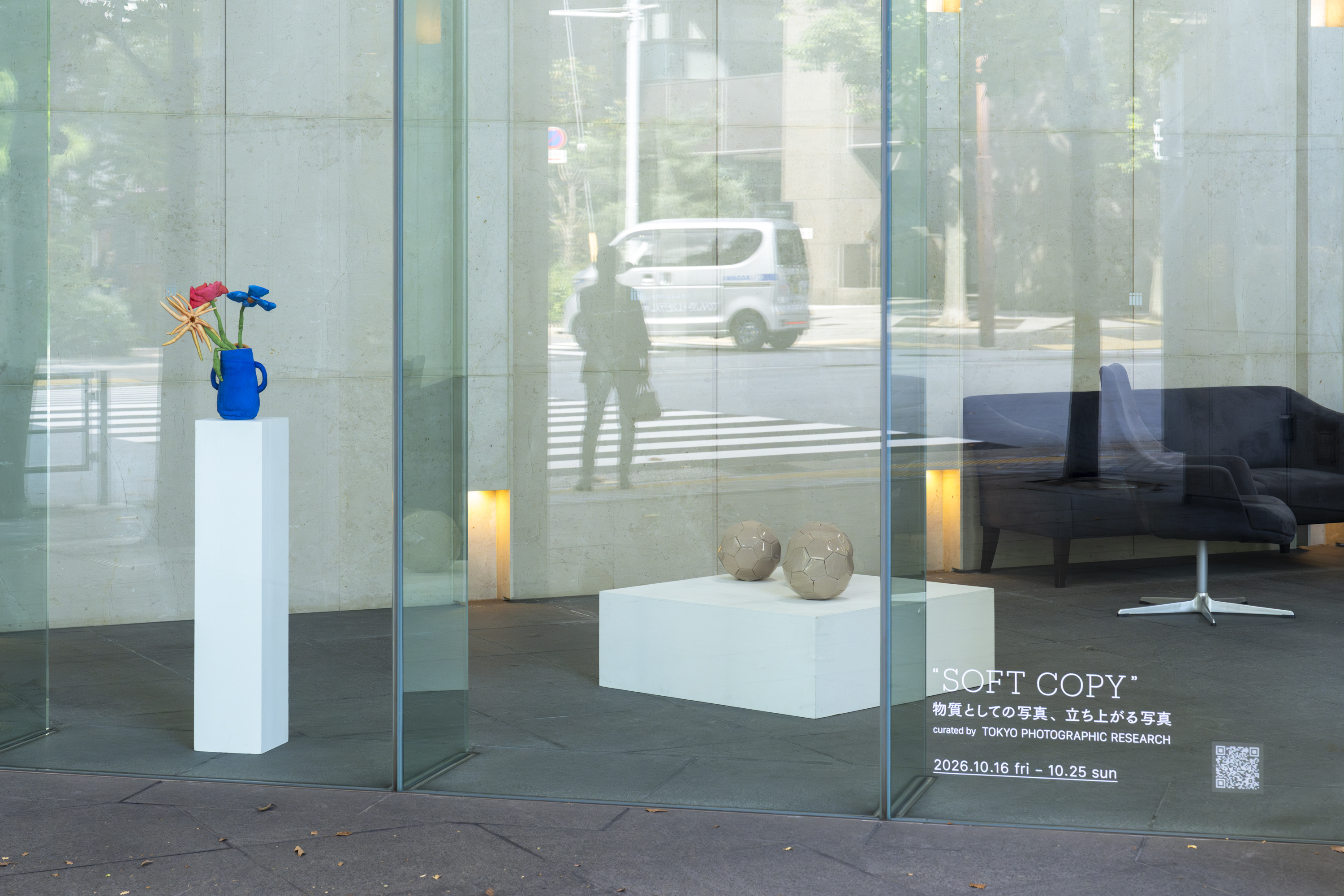
A football of photographic paper, a mass of tarpaulin. Where is the line beyond which something can still be called a photograph? Asked this, Koyama laughed. “I’d call all of it photography.”
“An image generated by AI, or the flaky, powdery scraps of a print that has peeled away: you could say they’re not photographs, and you could say they are. So my stance is to try calling them photographs first, and see what that lets us think about.”
Rather than simply looking at the texture of the peeled material, you ask: if something in this state is a photograph, then what is photography? The unease you feel in the exhibition becomes a doorway into that question.
Shimauchi also has another work in which peeled prints are set solid again. A print crumbles into scraps, then is solidified once more. Even as the format changes, its lineage as something derived from photography remains.
“I used to think about photography in terms of solid, liquid and gas. The elements are the same, but the state transforms. I think that’s how I understand photography.”
Is it like tofu and okara, the soy pulp left over from making it? “Exactly,” he says. Things born of the same material appear before us in entirely different forms. Each work was selected with an eye to how it would look, and at what scale, in spaces such as the hotel.
The “clash” of a wire puzzle and a scanner
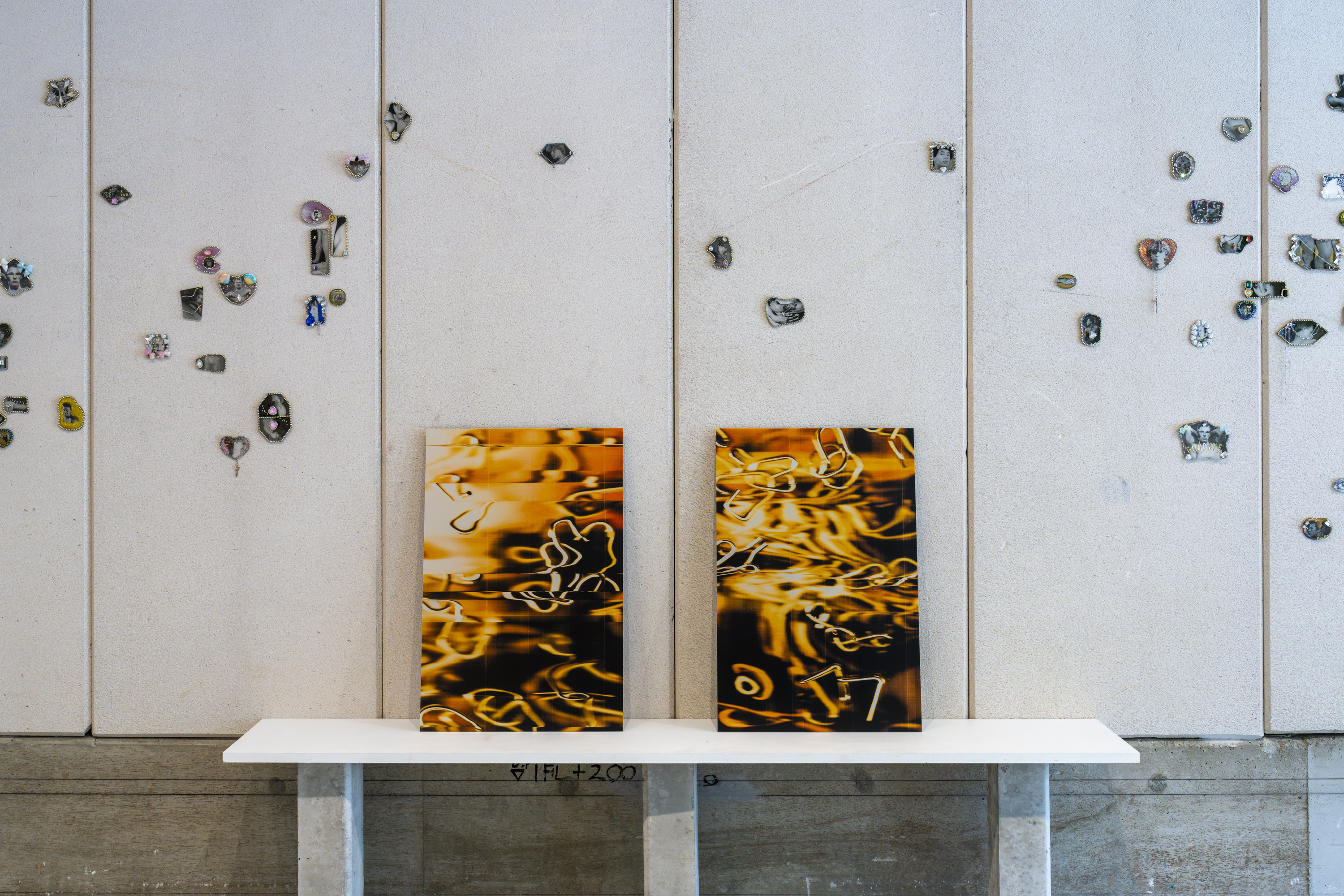
Koyama is also exhibiting as an artist. Clash grew out of a hand scanner and wire puzzles. It started during the pandemic when, with time on his hands, he became absorbed in wire puzzles.
“You’re thinking it through, maybe if I turn this here and twist it, it’ll come apart, and then at some moment you didn’t intend it just slips free. Your body solves it before your head does. Only afterwards do you realise it’s come apart. I found that fascinating.”
Scan a wire puzzle as it is, uneven, and it clatters against the glass it is pressed onto: a collision between a scanner trying to capture an image and a physical object. The data is then printed directly onto an aluminium panel with UV ink, the ink striking its support to become an image. This double “clash” gives the work its title.
“There’s what you want to photograph, and what ends up being photographed. Something unexpected appearing in a shot or a scan felt similar to the puzzle coming apart in a way your head didn’t plan.”
Leaning on chance while building photography up as an object with hand and tool, it is, indeed, a deeply craft-like work.
A place to stop and ask, “What is this?”
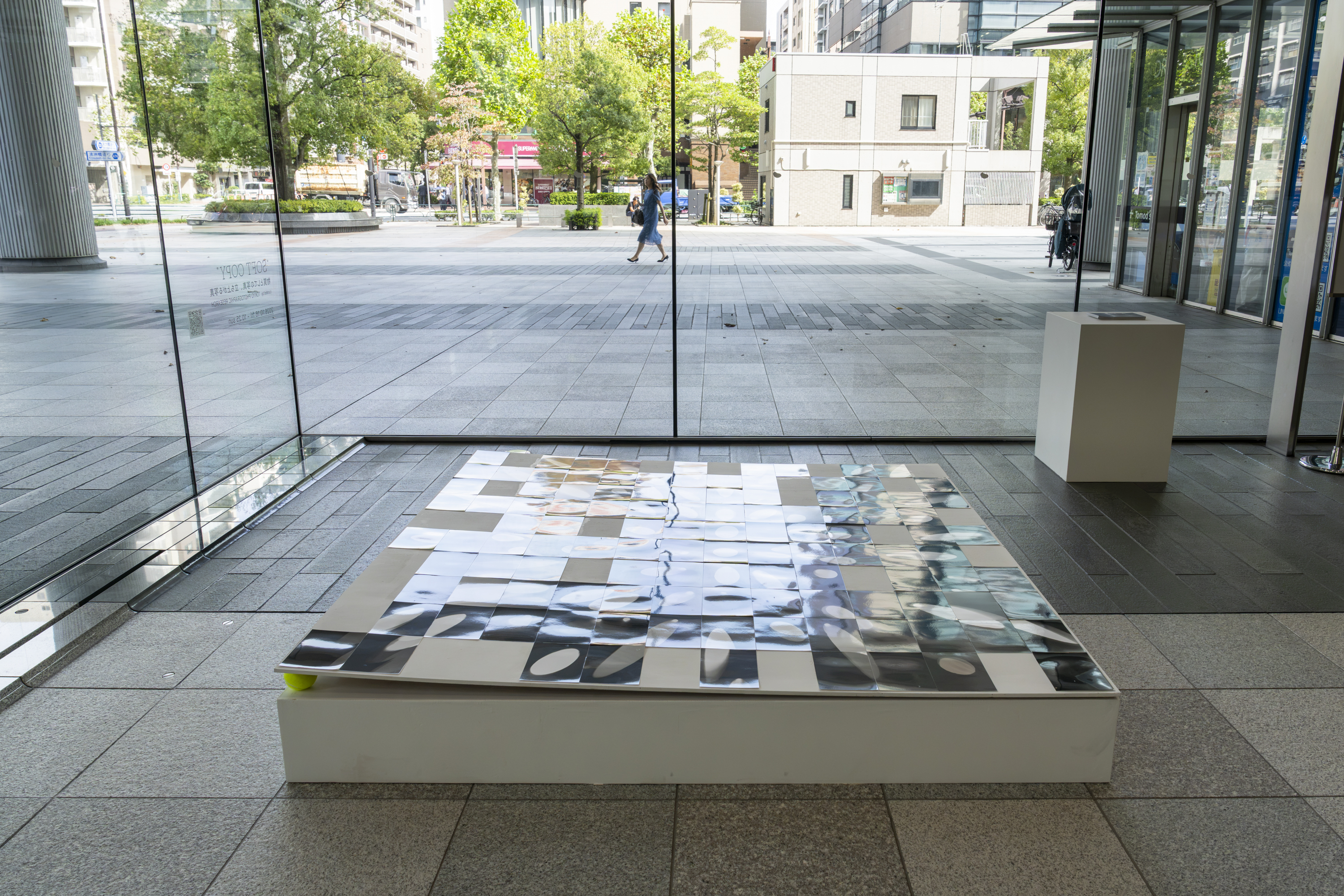
Office entrances are places where people hurry past on their way to work or meetings. It was precisely there that the team placed works that cannot be taken in simply by looking at what they depict.
“When you show photographs in the city, I think you first need people to stop and wonder what something is. Instead of glancing and thinking, ‘Oh, a photo of a landscape somewhere,’ you want them to ask what on earth this scattered heap is. They scan it with the app and find it’s made from photographic prints, and they wonder why, and what kind of work it is. It mattered that these pieces sit in office lobbies seen by many people, as a trigger that drives that wish to know.”
An original digital guide for smartphones is also available. Point the camera at a work and its introduction page appears, with a read-aloud button to listen to the commentary.
“Exhibitions often give you only a short caption, or just a title. On the other hand, even with lots of information, it’s hard to understand a work if you’re not used to looking at art. With this format, you get just the right information for seeing works while walking around town. For people visiting Nihonbashi Hamacho for the first time, having a guide to the works and a map is really helpful, and important.”
The scale of Nihonbashi Hamacho

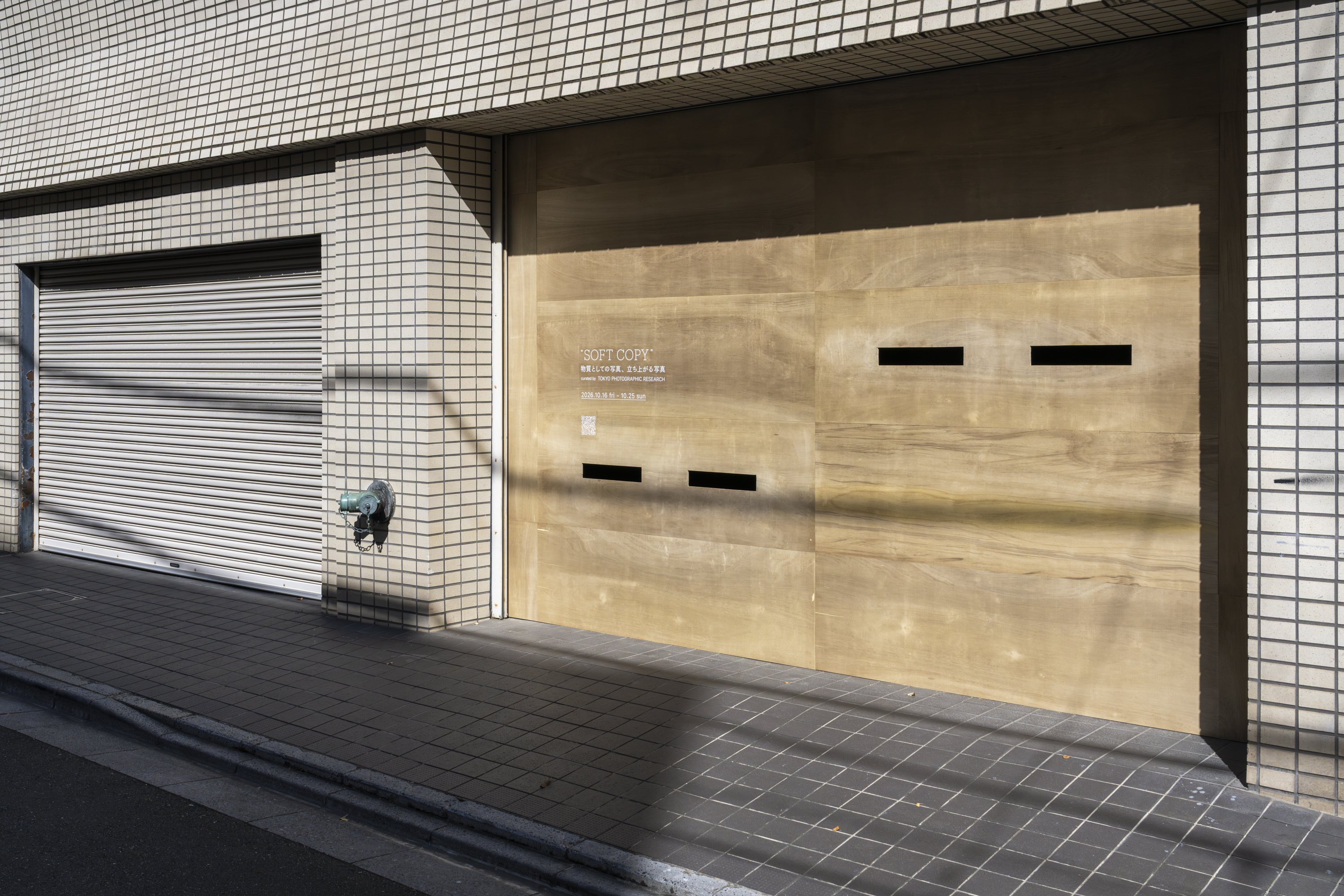
What Koyama returned to again and again was the pleasingly compact size of the Nihonbashi Hamacho area.
“Within walking distance there are entrances in different formats, not just offices but a hotel too, and there are works in them. There’s the special gallery at the core, where the works come together, and there are videos at the Former Danto Building. In the end, I think we made something well balanced.”
Large photography festivals and art events are spreading across so many venues that they are becoming impossible to see in one go. The strength of having everything gathered in one corner of the city, Koyama says, feels more of the moment.
For those visiting in the remaining days, he hopes they will come intending to spend time slowly in the neighbourhood rather than rushing around: good coffee and sweets, a popular udon restaurant, detours enjoyed along the way while making the rounds of the exhibition. “Maybe there should have been a work in a café, too,” he adds.
He also sensed that what was possible here was entirely different from the areas TPR has worked in before. After this exhibition, he says, he would like to try a more straightforward photography exhibition in Nihonbashi Hamacho, one that engages with “looking at images” within the city, on a micro scale, building it up like a festival. He also told us he hopes to continue working in Nihonbashi Hamacho, research included.
Exhibition information
“SOFT COPY” is on view until Sunday, October 25. Admission to all venues is free. The main venues are the Tornare 1F Special Gallery, the lobby floor of HAMACHO HOTEL and the Former Danto Building, with satellite venues in office entrances nearby. For participating artists, opening hours and other details, please see the exhibition page (in Japanese).